project-highlight-image

Automated FarmBot Lighting System

This project involved the development of an automated, height-adjustable LED lighting system for the FarmBot Genesis to improve lighting consistency and reduce energy use in controlled-environment agriculture. The system used an ultrasonic sensor to estimate plant canopy height and a motorized winch mechanism to reposition LED fixtures and maintain an optimal light-to-canopy distance. Subsystem testing validated safe mechanical operation, sensor accuracy, reliable homing, and demonstrated an estimated 43% reduction in lighting energy consumption compared to fixed-height systems.
Home
Questions?
hero-image

Drew Geiser

Project Timeline

Jan 2025 - Dec-2025

HighlightS

  • Engineered a winch-driven lifting mechanism capable of synchronously repositioning multiple LED fixtures while maintaining alignment and load stability.
  • Established an empirically derived light-to-canopy operating distance through PPFD testing to inform mechanical sizing and control logic.
  • Integrated safety features, including limit switches and an electromagnetic brake, to prevent uncontrolled motion of the lighting system.
  • Conducted structural and performance testing, confirming acceptable shaft deflection under load and repeatable homing behavior.
  • Quantified energy efficiency gains, showing that dynamic light positioning can substantially reduce power demand relative to static lighting.

SKILLS

Solidworks
Electromechanical System Integration
Motor Selection & Drive Integration
Engineering Calculations (Deflection, Torque, Load Analysis)

External Links

Technical Validation & Design Details


  • Light Intensity Characterization: Empirical PPFD testing quantified the relationship between LED fixture height and canopy light delivery, identifying an optimal operating distance of approximately 0.35 m used to define lift travel limits and control setpoints.

  • Canopy Height Sensing: Ultrasonic sensor validation demonstrated a typical measurement error of approximately 24 mm, meeting design tolerances and supporting conservative canopy-responsive positioning at the subsystem level.

  • Energy Efficiency: Comparative analysis showed that dynamically adjusting light height can reduce lighting energy demand by approximately 43% relative to fixed-height operation, with negligible power draw from the lift mechanism.

  • Safety & Risk Mitigation: A formal Failure Modes and Effects Analysis (FMEA) informed safety-critical design decisions, including mechanical travel limits, limit switches, and an electromagnetic brake to prevent uncontrolled motion

PPFD_vs_Distance_power_law (1).png

Figure 1: Measured PPFD as a function of LED fixture height, used to determine the optimal light-to-canopy operating distance (~0.35 m).
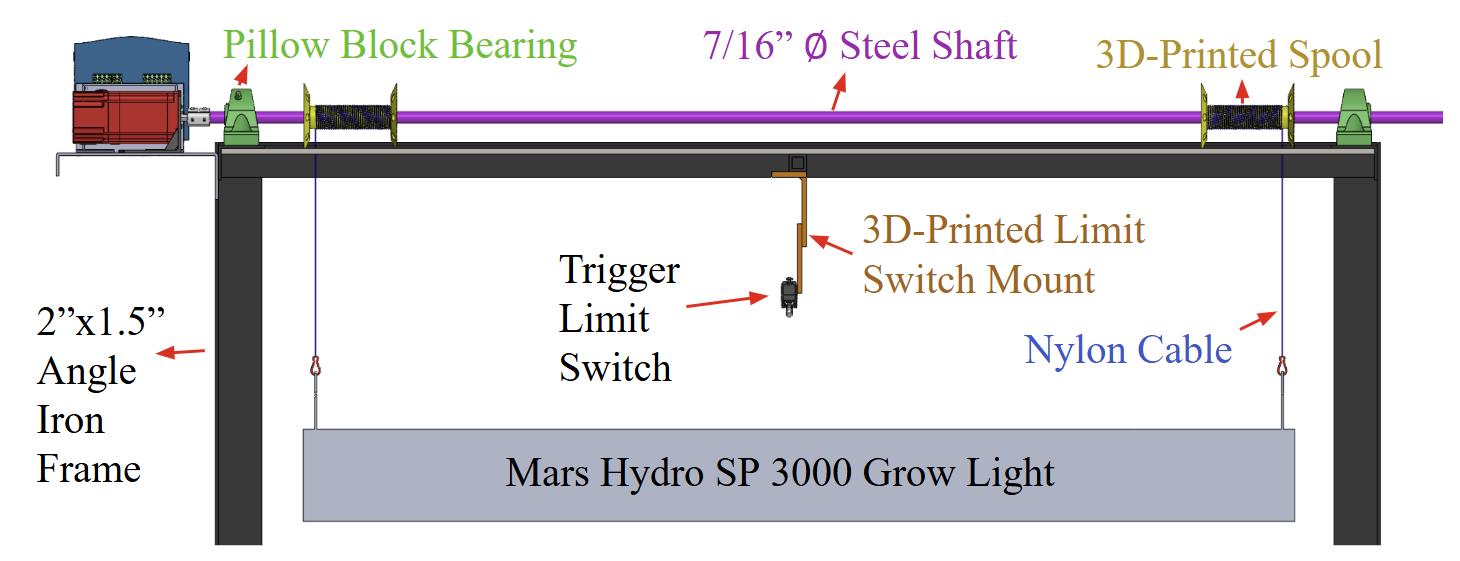

LabeledSectionView.png

Figure 2: Section view of the winch-driven lighting lift mechanism integrated above the FarmBot growing bed.
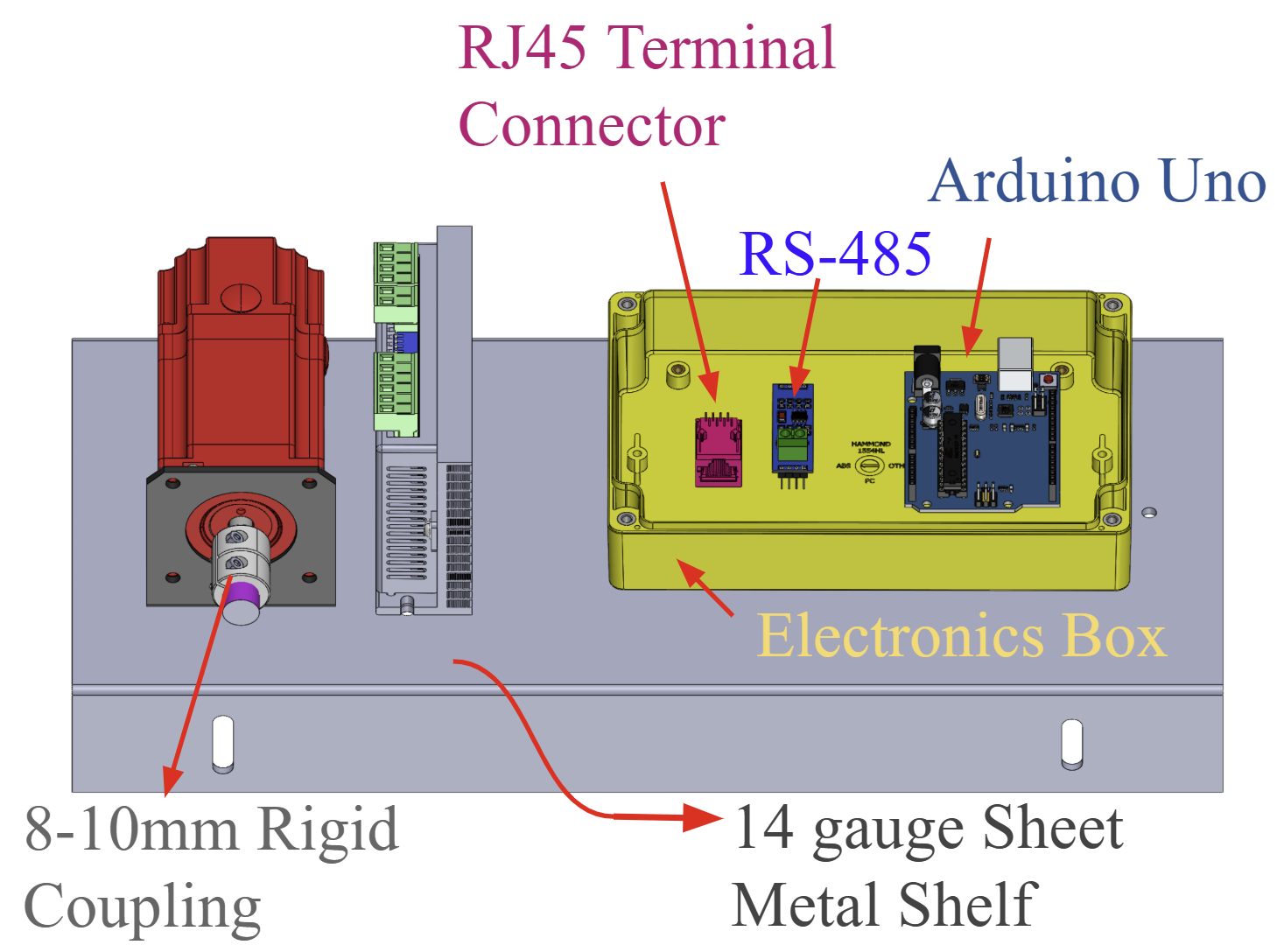

LabeledShelve1.png

Figure 3: Electronics mounting shelf supporting the stepper motor, motor driver, and Arduino-based control hardware.
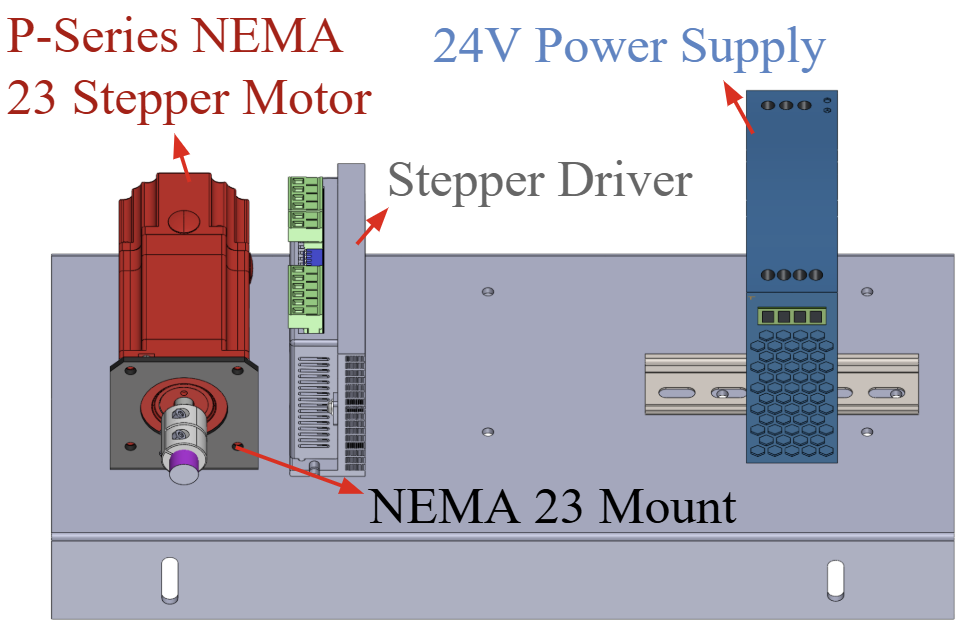

Pasted image

Figure 4: Electronics mounting shelf supporting the stepper motor, motor driver, and power supply.

| lowinertia |
Engineering Portfolio in 15 minutes
Create Your Portfolio