

Mission Objective:
The objective of this project was to design, manufacture, and test an unmanned aerial vehicle (UAV) capable of vertical take-off and landing (VTOL) while also maximizing forward-flight endurance through efficient gliding capabilities. To constrain the design space and ensure feasibility within the available propulsion and structural limits, a maximum takeoff weight (MTOW) of 3.5 kg was established with a desired cruise speed of 20 m/s. The selected configuration was therefore required to balance hover capability, aerodynamic efficiency in forward flight, and overall system mass.
Geometry Selection:
The first major step in the design process was the selection of an aircraft configuration capable of meeting the mission requirements. Three candidate architectures were evaluated:
A quadcopter with a fixed wing
A twin-motor configuration mounted on a movable or tilting wing
A tri-copter configuration with actuated front motors and conventional aerodynamic control surfaces
Each configuration was assessed in terms of system complexity, mass, controllability, aerodynamic efficiency, and suitability for extended forward flight.
The quadcopter with a fixed wing was the most conservative configuration considered, primarily due to its widespread use and relatively low control complexity. In this configuration, the propellers are placed symmetrically about the aircraft’s center of gravity, with alternating rotation directions to cancel reaction torques. This symmetry allows yaw, pitch, and roll to be controlled entirely through differential thrust, eliminating the need for aerodynamic control surfaces during hover and forward flight. A generic quadcopter with a fixed-wing configuration can be seen below in Figure 1.

Figure 1: Generic quadcopter fixed-wing UAV configuration
While this approach offers a relatively simple stability control scheme, it presents several notable drawbacks for the mission at hand. First, maneuverability and efficiency during forward flight are limited. Without control surfaces such as elevators or ailerons, the aircraft must rely solely on differential motor thrust to generate control moments, which is energetically inefficient and reduces endurance. Second, the requirement for four propulsion units significantly increases system mass. Motors and electronic speed controllers (ESCs) are among the heaviest components of a small UAV, and the added weight directly conflicts with the project’s goal of maximizing flight time within a strict MTOW constraint.
Additionally, the presence of four propellers increases aerodynamic interference and parasitic drag during forward flight, further reducing glide efficiency. For these reasons, despite its simplicity and reliability, the quadcopter-based configuration was deemed suboptimal for a mission emphasizing endurance and aerodynamic performance.
The twin-motor configuration was explored as a potential means of minimizing propulsion system mass by reducing the number of motors to two. A representative twin-motor configuration is shown below in Figure 2. In principle, this approach offers a significant weight advantage, allowing additional mass margin for batteries or structural components. However, several critical limitations were identified during the analysis.

Figure 2: Representative twin-motor configuration
Hover stability with only two propulsion units presents a fundamental challenge. Unlike quad- or tri-copter configurations, a twin-motor system lacks inherent redundancy and requires precise thrust vectoring to maintain attitude control during VTOL operations. Achieving stable hover would necessitate rotating the entire wing, along with the attached propulsion units, by approximately 90 degrees to generate vertical lift. This introduces substantial inertial and aerodynamic penalties.
The energy expenditure required to actuate and hold the wing in a vertical orientation was determined to be prohibitively inefficient. Rotating a large lifting surface demands a high-torque actuation system, requiring a significantly sized servo or motor. The mass of this actuator, combined with the structural reinforcement needed to support the rotating wing mechanism, largely negates the initial weight savings achieved by reducing the number of propulsion units.
Furthermore, the mechanical complexity introduced by a full-wing tilt mechanism increases the risk of failure and complicates both manufacturing and maintenance. The need to manage aerodynamic loads, actuator backlash, and alignment during repeated transitions between hover and forward flight further reduced the feasibility of this configuration.
For these reasons, despite its potential mass advantages, the twin-motor tilting-wing configuration was deemed unsuitable due to poor hover stability, high actuation energy requirements, and increased mechanical complexity.
The tri-copter configuration was ultimately selected as the optimal compromise between mass efficiency, maneuverability, and aerodynamic performance. By reducing the number of propulsion units from four to three, the overall system mass is decreased, enabling greater allocation of the weight budget toward batteries and structural components, directly supporting increased endurance.
A depiction of the selected configuration is shown in Figure 3. The two forward motors are mounted on structural supports positioned ahead of the main wing, ensuring that the propeller slipstream remains unobstructed during VTOL operations and minimizing aerodynamic interference.
[Insert modified assembly image here]
Figure 3: Tri-copter configuration
In this configuration, the two forward motors are actuated to provide vertical thrust during takeoff and landing and rotate forward for cruise flight, while the aft motor provides additional control authority. During forward flight, conventional aerodynamic control surfaces are employed to control pitch and roll, allowing control moments to be generated efficiently without relying on differential thrust. This results in improved maneuverability and reduced energy consumption compared to the quadcopter configuration.
The primary trade-off associated with the tri-copter architecture is increased control system complexity. The hybrid control strategy—combining thrust vectoring during VTOL with aerodynamic control surfaces during forward flight—requires more advanced control logic, sensor fusion, and tuning. However, this added complexity was considered an acceptable trade given the substantial gains in mass reduction, flight efficiency, and handling characteristics.
Additionally, the tri-copter configuration offered a higher degree of design novelty, providing valuable experience in multidisciplinary system integration involving mechanical actuation, aerodynamics, propulsion, and control systems. Following the configuration selection, the next steps in the design process focused on aerodynamic sizing and airfoil selection for both the main lifting wing and the horizontal stabilizers.
Aerodynamic Sizing:
Airfoil selection for the main lifting wing was driven by the mission priorities of maximizing aerodynamic efficiency during cruise while maintaining benign stall behavior. In particular, the selected airfoil was required to exhibit a high lift-to-drag ratio over the expected cruise angle-of-attack range, as well as delayed stall onset at higher angles of attack to improve controllability and robustness during low-speed and transition flight.
Based on the intended cruise speed of 20 m/s, the operating Reynolds number was first estimated to ensure that candidate airfoils were evaluated in the appropriate low-Reynolds-number regime. The Reynolds number is defined as
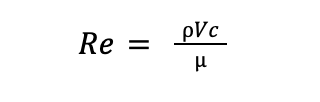
where V is the cruise velocity, c is the characteristic chord length, is air density, and is the dynamic viscosity of air. Assuming standard sea-level conditions (=1.2225 kg/m3, =1.8110-5 kg/ms) and an estimated chord length between 10 and 25 cm, the resulting Reynolds number (100,000 to 350,000) falls within the low-to-moderate Reynolds number range typical of small UAVs. This regime places strong emphasis on airfoil shapes specifically designed to maintain performance at low Reynolds numbers.
A survey of candidate airfoils was conducted with particular focus on the Eppler family, which is extensively documented for low-Reynolds-number applications. Multiple Eppler airfoils were compared at the calculated Reynolds number using XFOIL to evaluate lift curves, drag polars, and stall characteristics. Among the candidates, the Eppler 387 consistently demonstrated superior performance relative to the design objectives. Figure 4 below shows the drag polar and lift coefficient versus angle-of-attack for an Eppler 387 airfoil at Reynolds numbers 100,000 (shown in yellow) and 500,000 (shown in purple).

Figure 4: Drag Polar and lift coefficient versus angle-of-attack for an Eppler 387 airfoil at Reynolds numbers 100,000 (shown in yellow) and 500,000 (shown in purple). Note that stalling behavior is not observed until relatively high angles of attack
As shown in the lift coefficient versus angle-of-attack results, the Eppler 387 exhibits a strong linear lift slope and achieves high maximum lift coefficients while maintaining smooth behavior up to relatively high angles of attack. Additionally, the drag polar comparison highlights the favorable lift-to-drag characteristics of the Eppler 387 across the anticipated cruise and loiter lift coefficients. Compared to other Eppler airfoils evaluated, the Eppler 387 showed improved efficiency and a more gradual stall progression, making it well-suited for both endurance-focused cruise flight and low-speed operational phases.
Once the main wing airfoil was selected, the next step was to size the wing planform area such that the aircraft could generate sufficient lift at the intended cruise condition. A first-order sizing approach was used by enforcing steady, level flight at cruise, where the required lift equals the aircraft's weight
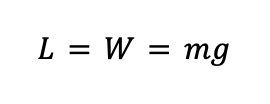
where L is lift, and W is the aircraft's weight. Lift was modeled using the standard aerodynamic lift relation

Where p is the air density, V is the cruise velocity, S is the wing area, and CL is the lift coefficient at the cruise operating point. Solving for the required wing area gives:
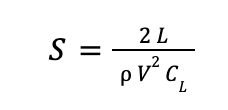
Using the maximum takeoff mass m=3.5 kg (W=3.59.81=34.3N), a target cruise speed of V=20 m/s, a representative cruise lift coefficient of CL=0.6, and assuming standard sea-level density =1.225 kg/m3 the required wing area was calculated to be S =0.234 m2
The main wing was sized to provide approximately S=0.234 m2of planform area to support steady cruise at the conservatively chosen lift-coefficient of 0.6 achieved roughly at an angle of attack of three degrees well below stall angles. This calculation provided a baseline wing size for subsequent geometric decisions (span and chord selection), and the final planform was refined to balance structural constraints and aerodynamic performance while maintaining the required lifting area.
With the required wing area established, the planform geometry was selected to meet manufacturing constraints while preserving the target lifting capability. The aspect ratio was therefore not chosen purely from an aerodynamic optimum, but was instead driven by the maximum part size that could be manufactured reliably.
A maximum wing chord of cmax=0.2 m was selected based on manufacturing limits. Using the previously calculated required planform area, the corresponding span for a constant-chord (rectangular) wing was determined from:
b=Sc=0.2340.2=1.167 m
For simplicity in fabrication and assembly, the span was rounded to a final value of b=1.2 m . Thus, the final wing planform was selected as a manufacturable geometry that satisfies the cruise lift requirement while remaining within the project’s fabrication constraints.
Following the finalization of the main wing geometry, the horizontal stabilizer was sized to provide the necessary pitching moment required to trim the aircraft in steady cruise. The primary function of the horizontal tail in this design is to balance the pitching moment generated by the main wing about the aircraft's center of gravity, ensuring longitudinal stability and controllability.
A symmetric airfoil was selected for the horizontal stabilizer to allow the tail to generate either positive or negative lift, depending on trim requirement,s without introducing inherent pitching moments. For this reason, the NACA 0010 airfoil was chosen. This airfoil provides predictable, linear lift characteristics and negligible zero-lift pitching moment, making it well-suited for stabilizing surfaces.
The horizontal stabilizer planform was designed as a straight tapered wing to reduce structural weight while maintaining aerodynamic efficiency. A root chord of 0.10 m was selected, with a taper ratio of 0.7. The stabilizer span was set to 0.40 m based on manufacturing simplicity. These geometric parameters defined the stabilizer platform area and lift-producing capability.
With the tail geometry established, the stabilizer lift was estimated using the standard lift equation at the cruise condition. The resulting tail lift, in combination with the selected moment arm between the tail aerodynamic center and the aircraft center of gravity, was used to generate a balancing pitching moment. The tail moment arm was therefore chosen such that the stabilizer-generated moment counteracts the pitching moment produced by the main wing, allowing the aircraft to trim at the desired cruise lift coefficient without excessive control deflection.
This sizing approach ensured that the horizontal stabilizer provides sufficient trim authority while remaining lightweight, manufacturable, and aerodynamically well behaved. The final tail geometry reflects a balance between stability requirements, structural simplicity, and practical manufacturing constraints.