

Development
- Fabricated Swagelok and AN tubing lines for cryogenic service, performed hydrostatic proof testing to 1.5x MEOP per SMC-S-016, oxygen-cleaned all hardware per NASA-STD-1740.15, and assembled the feed system plumbing.
- Built test stand structural framework, installed tubing and valve supports, and designed and fabricated custom propellant tank support plates.
- Updated test stand purge system to mitigate choked flow by sizing, selecting, and integrating new isolation valves.
- Conducted FEA of worst case system failure modes to ensure sufficient structural margin of safety.
Operation
- Acted as Test Conductor for two kerosene/liquid-oxygen engine campaigns involving leak checks (per NASA-STD-7012), cold-flow tests, and hot-fire operations on a cryogenic feed system.
- Responsibilities included handling high-pressure GN₂ bottles, manually setting regulator pressures, wiring instrumentation and igniters, and performing cryogenic system operations.
- Conducted three hot fires with LPL’s Jessie & James engine (540 lbf, ablatively cooled) and three hot fires with the Nomad engine (675 lbf, copper heatsink chamber).
- Analyzed cold-flow test data to establish regulator set pressures satisfying injector inlet pressure constraints and to identify optimal valve actuation timings throughout the ignition sequence.
- Co-authored a research paper published with the International Astronautics Congress (IAC) in 2025 analyzing the effects of thermal conditioning on startup transients in kerosene/liquid-oxygen engines. (IAC-25,C4,IP,41,x101208)
Gallery
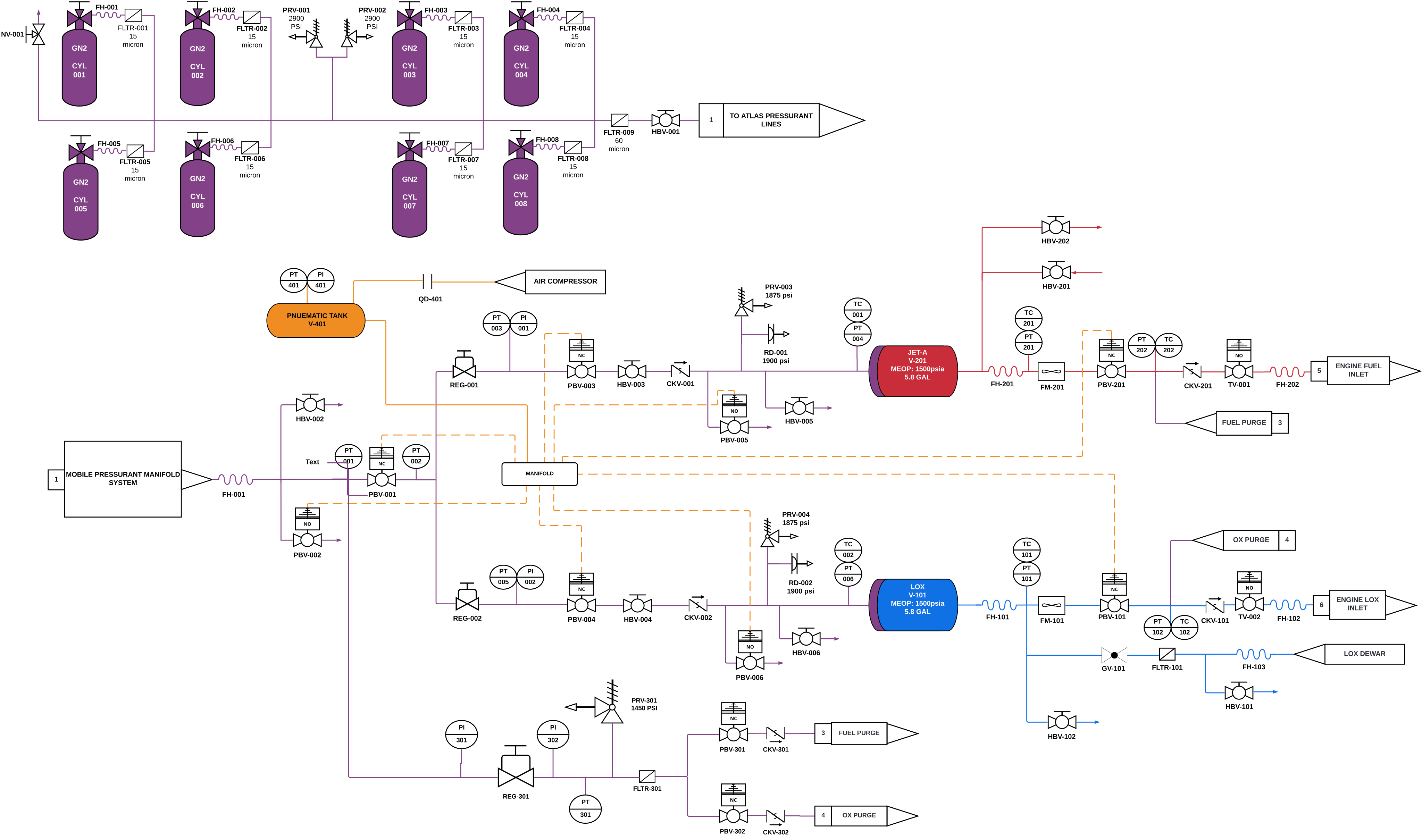
Fig. 1: Atlas test stand Piping and Instrumentation Diagram (P&ID)
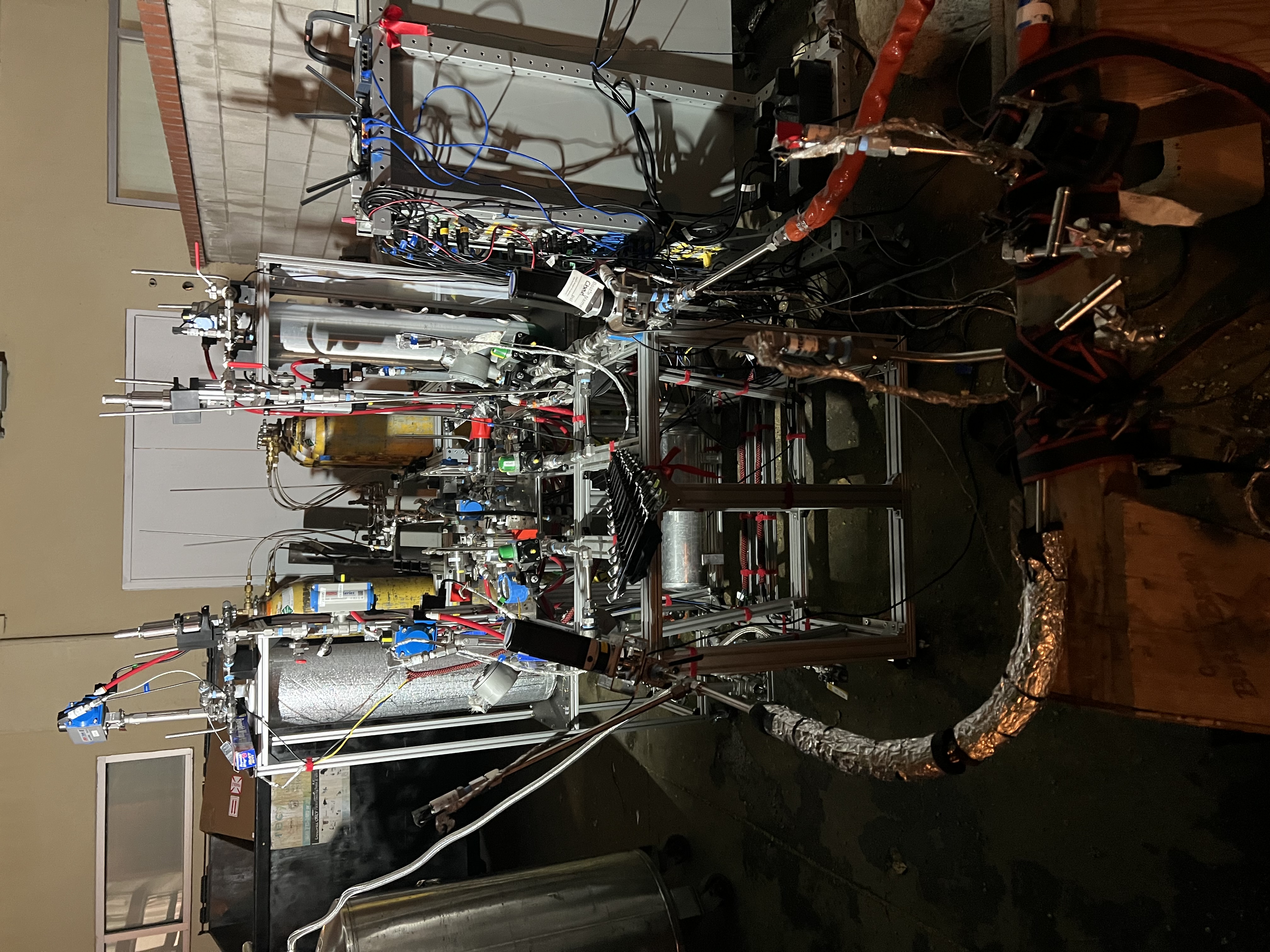
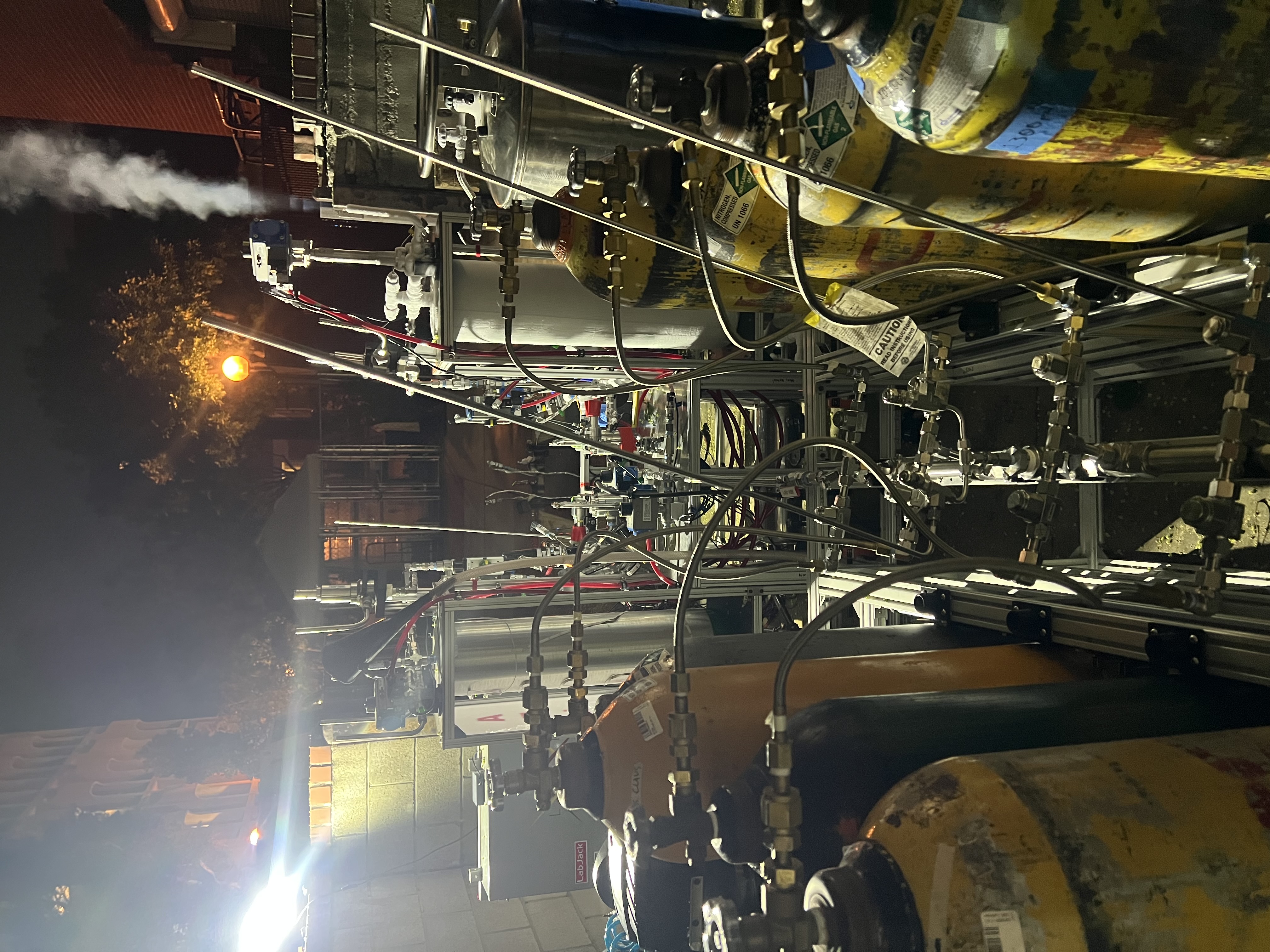
Fig. 2: Test stand set up for cold flows to determine valve actuation timings in ignition sequence
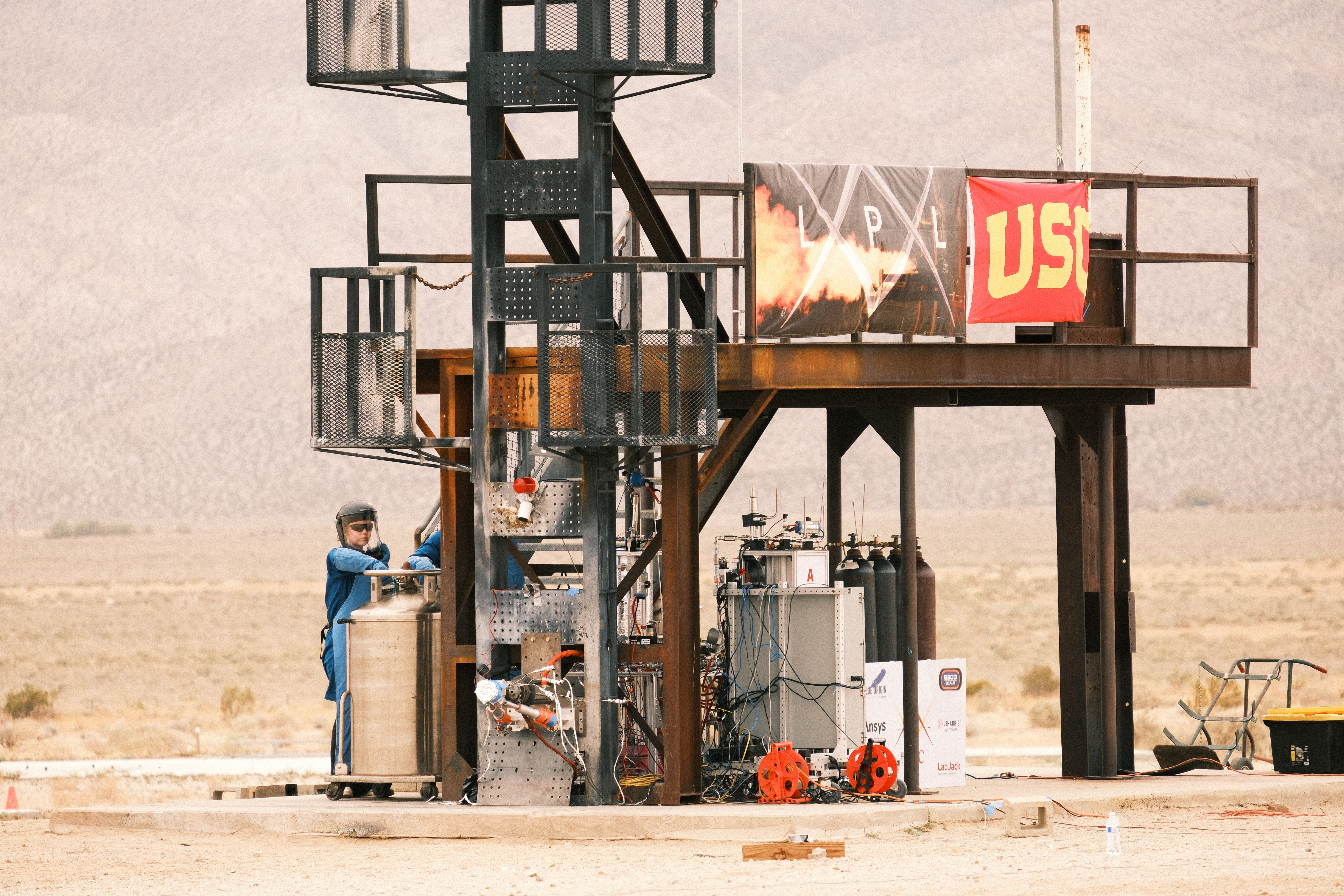
Fig. 3: My teammate and I acting as Test Conductor for J&J hot-fire at Reaction Research Society (RRS)