

Design Process and Concept Development
This project began with an evaluation of the existing belt installation process for the Achilles 7 conveyor testing system. The Achilles 7 is a device used by Intralox to test the strength and longevity of various belt products. The current loading method required two operators, involved multiple pinch points, and created unpredictable belt motion during unloading. The goal was to improve safety, reduce physical strain, and enable a single-operator workflow.
Multiple design concepts were developed to address three primary areas of the problem: mounting solutions, belt connection methods, and control mechanisms. Proposed concepts included fixed and mobile mounting options, several universal belt connection approaches, and both manual and powered control systems. Concepts were generated through brainstorming, sponsor discussions, site observations, and preliminary CAD modeling. Some of these can be seen below.
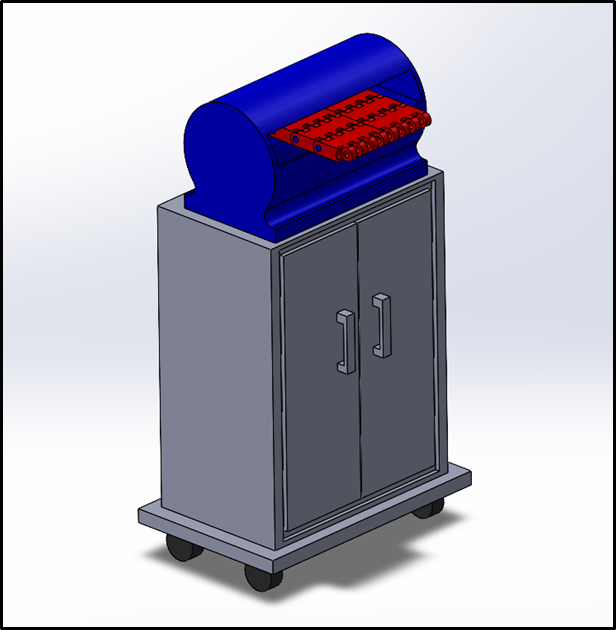
Mounting Solutions Concept: Rolling Cart
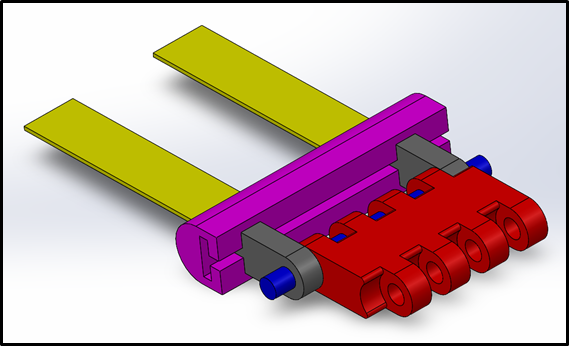
Belt Connections Concept: Modular T-Slot
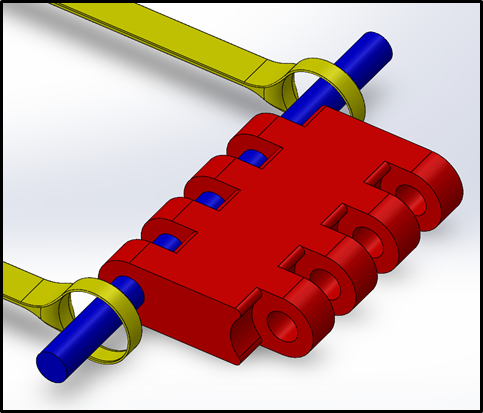
Belt Connections Concept: Two-Leg Web Sling
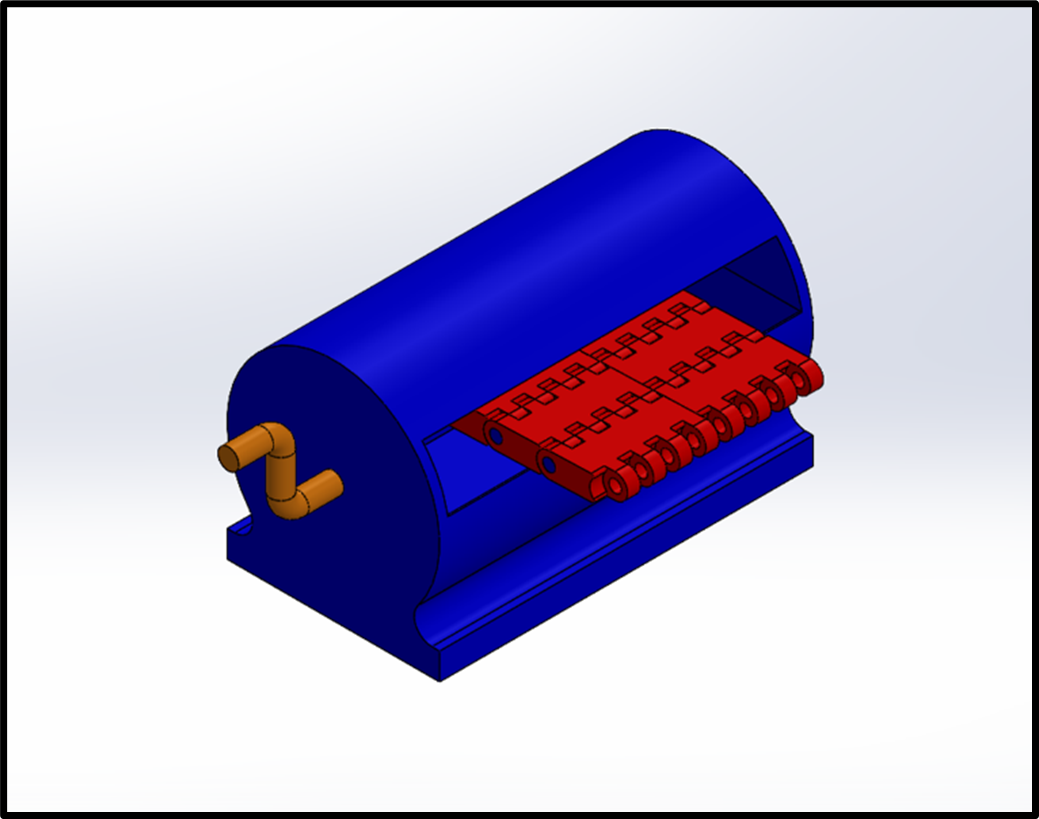
Controls Solutions Concept: Hand Crank Operated Winch
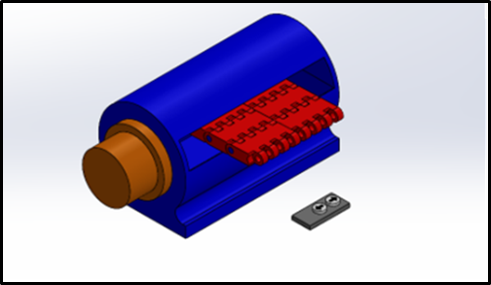
Controls Solutions Concept: Remote Operated Winch
To objectively select a final design, weighted decision matrices were used to compare concepts based on safety, ease of use, transportability, storage, manufacturability, cost, and compatibility with existing equipment. Sponsor priorities placed the highest emphasis on safety and transportability. Based on this analysis, a mobile rolling-cart solution was selected as the optimal approach.
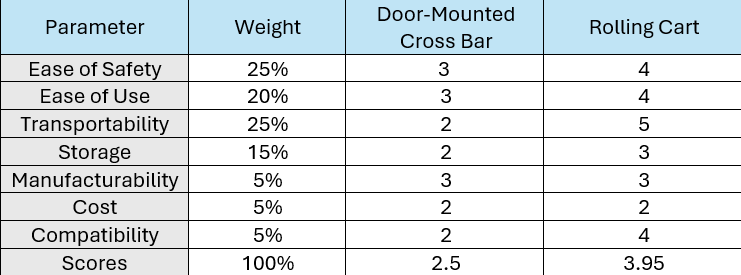
Example Decision Matrix
Engineering Analysis and Validation
Engineering analysis was performed to validate system stability, operator safety, and ergonomic performance under worst-case loading conditions. Free-body diagrams were developed to analyze wheel loading, frictional resistance, and tipping behavior for the carts when fully loaded with conveyor belt specimens.
Calculations were performed to verify that the carts would not slide or tip during belt installation. Static friction requirements were evaluated to ensure that locked casters could resist the maximum belt pulling forces encountered during operation. Moment calculations confirmed that the system maintained acceptable factors of safety against tipping, even when subjected to worst-case belt loads.
Additional analysis was conducted to ensure that operator force remained below the 30 lbf ergonomic requirement specified by the sponsor. Torque and force calculations for the hand-crank mechanisms confirmed that the required pulling forces were within acceptable limits throughout the loading process.
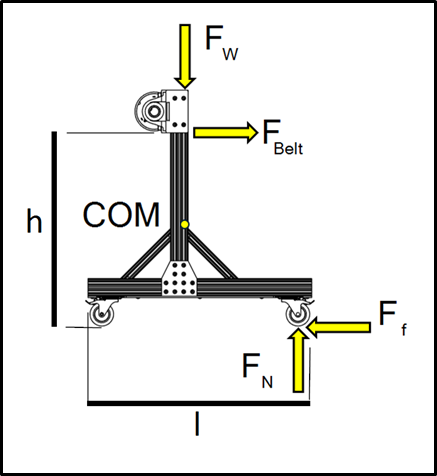
Free Body Diagram Of Spool Cart
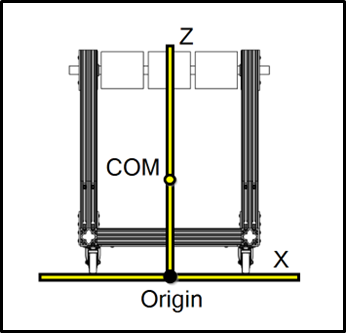
Center Of Mass For Spool Cart
Constraints, Requirements, and Standards
The design was governed by several key constraints, including workspace limitations, compatibility with multiple belt series, long-term durability, and strict ergonomic requirements. The system was required to fit within a limited footprint near the testing machine while remaining easy to store when not in use.
Safety considerations were a primary driver throughout the design process. The system was developed with reference to applicable ASME standards related to conveyor safety and load handling to minimize pinch-point exposure and ensure predictable, controlled belt motion. Material selection and component layout were chosen to support a minimum service life of ten years with regular use in an industrial environment.
Final Design Description
The final solution consists of two modular carts: a spool cart and a pull cart. The spool cart allows conveyor belts to be safely spooled off the floor and transported without exceeding minimum bend radius limits. This cart uses a hand-operated crank mechanism along with a custom made rachet setup to pull the belt up onto the roller safely and efficiently. The pull cart is used to draw the belt through the return side of the Achilles 7 testing system using a controlled, hand-operated crank mechanism and its own custom rachet.
During operation, the spool cart is aligned with the testing system and locked in place. A lightweight web sling is routed through the return path of the conveyor and connected to the belt’s connecting rod. The pull cart then applies controlled tension to draw the belt through the system. This approach eliminates uncontrolled belt movement, reduces pinch-point exposure, and allows a single operator to complete the installation process safely and efficiently.
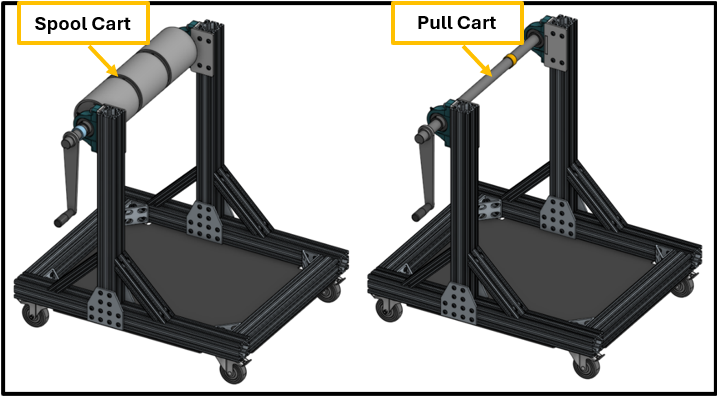
Current Final Cart Designs
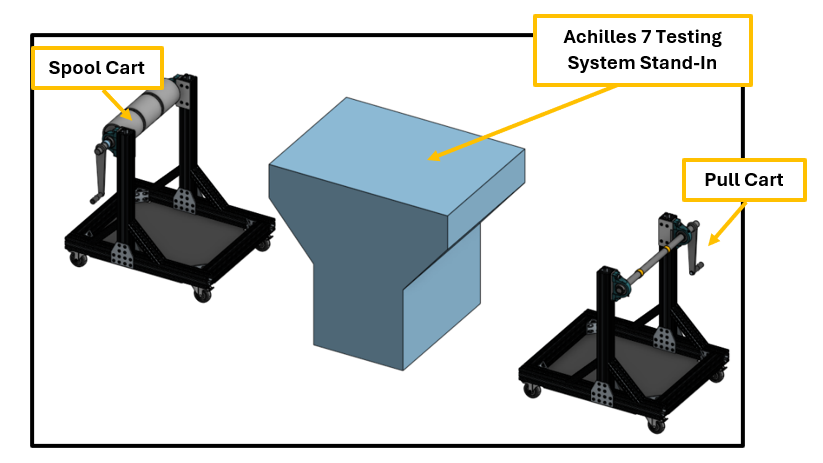
Carts Shown In Relation to the Achilles Testing Machine
Deliverables and Documentation
Final project deliverables included fully defined CAD assemblies, detailed engineering drawings, and a complete bill of materials with supplier sourcing. Documentation was prepared to support fabrication, procurement, and long-term use of the system in an industrial testing environment. The final design met all sponsor-defined performance, safety, and ergonomic requirements.
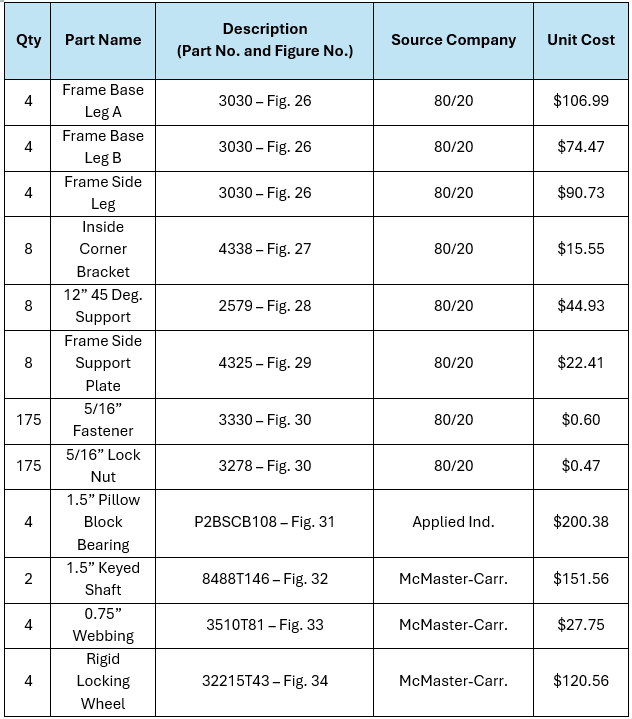
Section of Parts List From Final Report
Lessons Learned
This project reinforced the importance of designing for real users, validating assumptions through engineering analysis, and balancing safety, manufacturability, and cost constraints when developing solutions for industrial applications.