hero-image
HOME
hero-image
project-highlight-image

Sensor and PCB Integration on an Electric Vehicle

hero-image
Vaanika Singla

Project Timeline

May 2025 - Jun-2025

OVERVIEW

Integrated multiple PCBs and sensors onto the vehicle, focusing on power distribution, system bring-up, and debugging non-functional hardware in a real racing environment.

HighlightS

  • Daisy chained power and wiring across multiple sensors to integrate them into the vehicle electrical system
  • Used data logger software to identify non-reporting sensors and isolate hardware vs software issues
  • Debugged Hall effect sensors by testing with magnets to determine whether failures were due to sensor faults or mounting and positioning issues
  • Reworked PCBs that were not correctly controlling vehicle functions
  • Diagnosed repeated failures in an Arduino-based Ready-to-Move circuit and reworked the PCB to make the system reliable

SKILLS

Power distribution and wiringSensor integrationHardware debugging PCB rework and validationEmbedded systems debugging (Arduino-based systems)Root cause analysis Design Presentation

Additional Details

This project focused on bringing up and integrating multiple PCBs and sensors onto the vehicle and making sure they worked reliably as part of the full electrical system. I handled power distribution by daisy chaining power across sensors and routing wiring to support stable operation during vehicle testing.

When sensors were not functioning as expected, I used the vehicle’s data logger software to verify which sensors were reporting correctly and to narrow down whether the issue was related to wiring, software configuration, or the hardware itself. For Hall effect sensors, I physically tested each sensor with a magnet to determine whether the failure was due to a faulty sensor or incorrect mounting and positioning on the car.

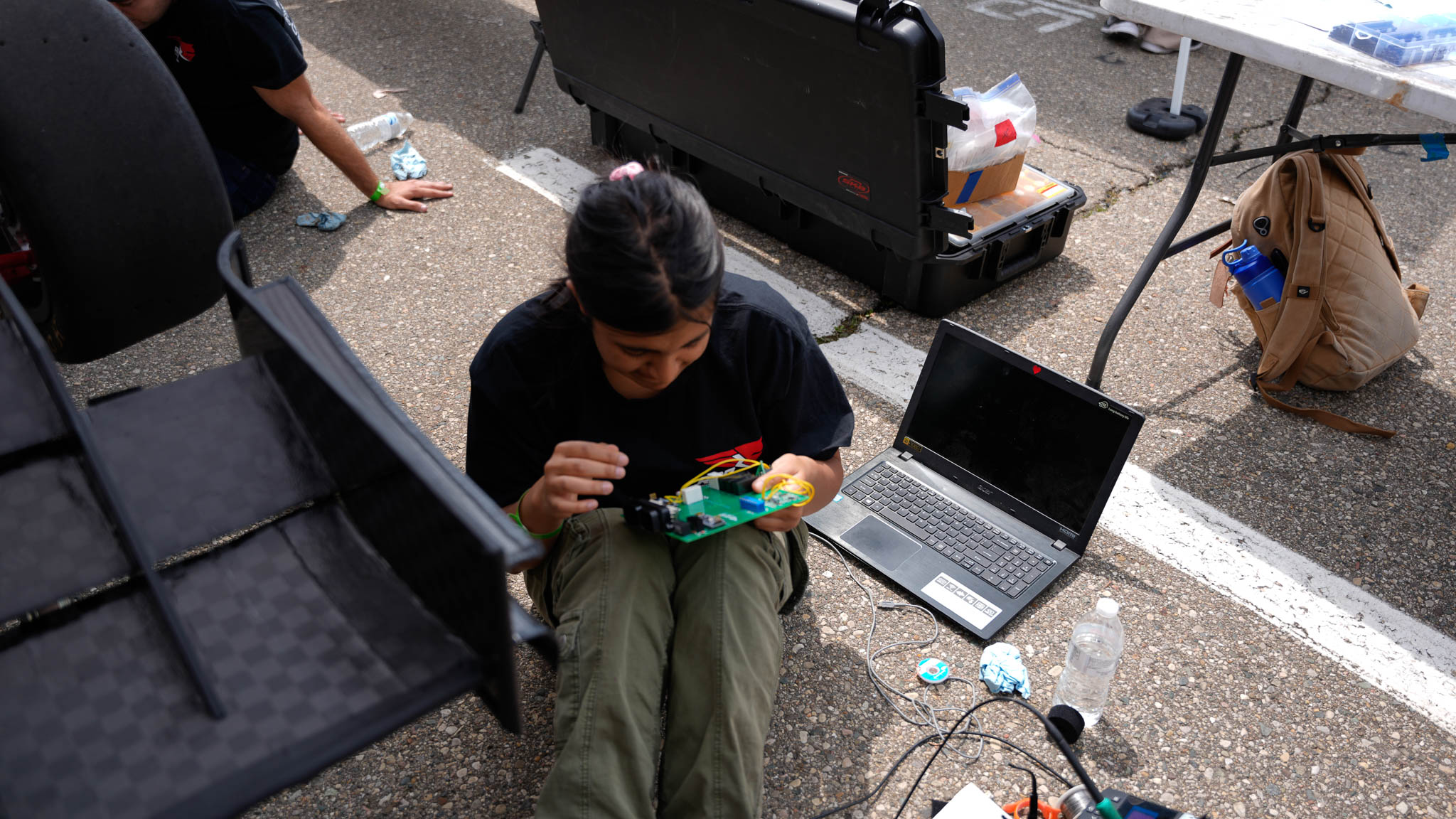
_DSC0269.jpg

On the PCB side, I reworked boards that were not properly controlling vehicle functions. One major issue involved the Arduino-based Ready-to-Move circuit, where the Arduino repeatedly failed. I traced the issue back to the PCB design and wiring, then reworked the board so the circuit would operate reliably and safely as intended.

I was the only first year on the team to present at the design portion of FSAE Competition this year in front of judges from the industry.

lowinertia
Portfolio Builder for Engineers
Created by Aram Lee
© 2025 Low Inertia. All rights reserved.