hero-image
HOME
hero-image
project-highlight-image

Shopping Cart Design

hero-image
Nick Glenn

OVERVIEW

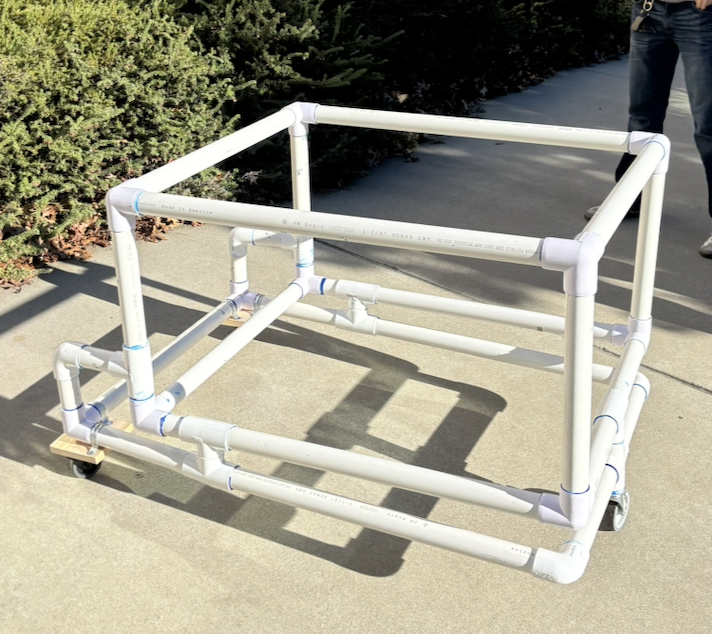
The objective of this project was to apply core principles of mechanical design, analysis, and fabrication to create a functional and robust solution for a real-world problem. The primary goal was to design, analyze, and build a novel, open-source, compliant shopping cart.

HighlightS

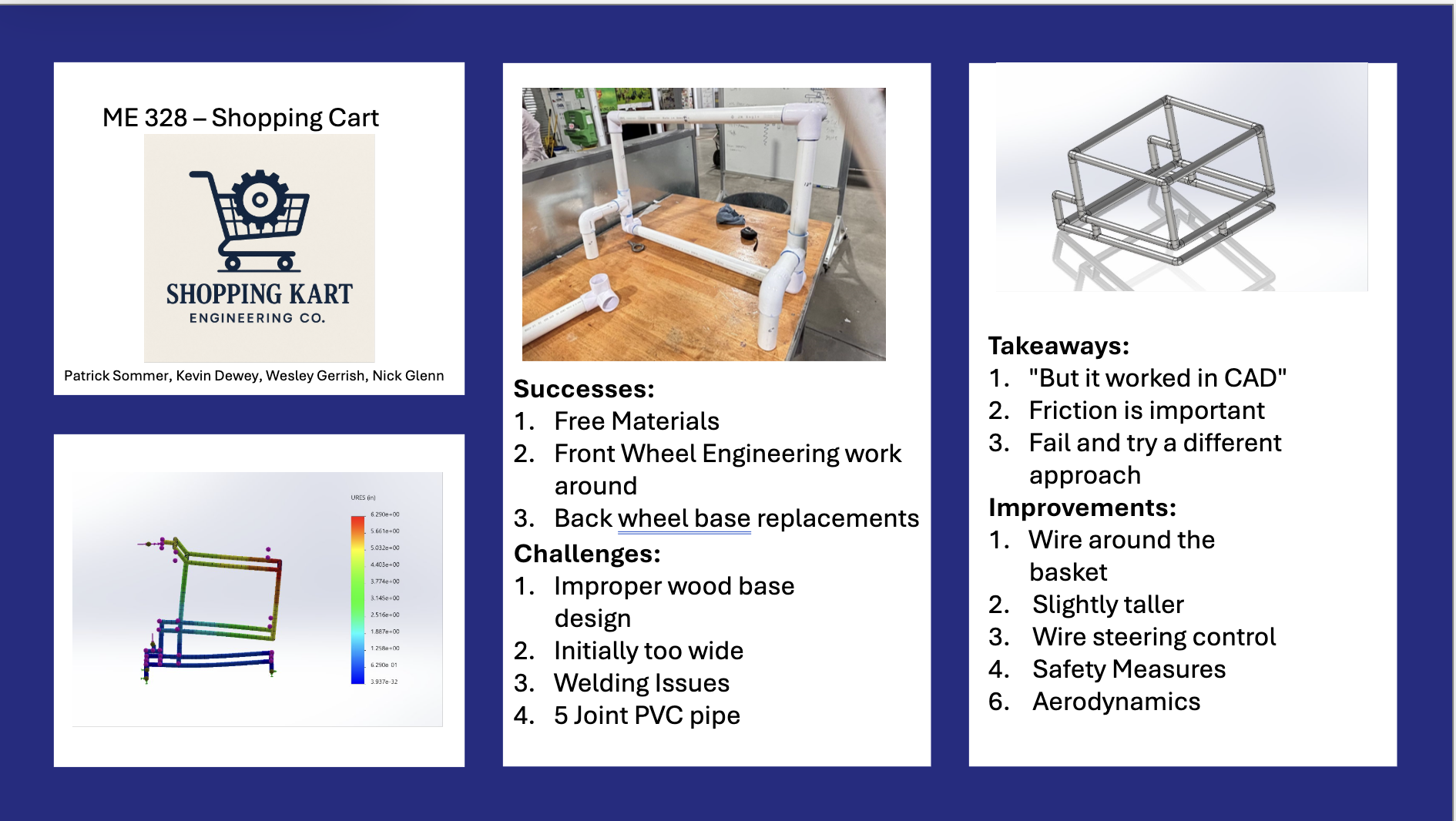
Load Case Analysis: Defined and modeled critical load cases for the cart, including design for strength, stiffness, and abuse cases

Finite Element Analysis (FEA): Used FEA modeling to identify areas of peak stress and deflection.

Critical Point Testing: Developed a detailed testing plan to examine critical components such as wheels/axles and potential buckling points.

Measurement Documentation: Created a documented test setup, measured deflection at critical points on the completed design, and presented the data in a clear table.

Professional Documentation: Produced an executive summary-style report suitable for an open-source design forum, ensuring non-experts could understand the design.

SKILLS

SolidWorksFEAPrototyping & TestingStructural AnalysisMechanical Design

Additional Details

Shopping Cart Design

This project involved the full-cycle development of a novel, open-source compliant shopping cart, initiated to explore advanced applications of mechanical design, analysis, and fabrication. The core objective was to apply modern engineering methods to create a robust and functional solution suitable for public use, while maintaining detailed documentation for community replication.

The engineering process focused heavily on ensuring structural integrity and user safety:

  • Design & Modeling: Used SolidWorks for all conceptualization and detailed CAD modeling, producing a full set of part and assembly drawings, complete with a Bill of Materials (BOM) and GD&T.


  • Structural Analysis: Established critical load cases, including design for strength, stiffness, and abuse cases. Both engineering hand calculations and Finite Element Analysis (FEA) were performed to justify safety factors and analyze areas of peak stress and deflection.


  • Physical Validation: Developed and executed a rigorous testing plan that involved component prototyping and measuring deflection at critical points on the final design. Results were compared directly against FEA predictions to validate the accuracy of the computational models.

Pasted image

  • Open-Source Deliverables: The final deliverable was a comprehensive design package and a report written for an open-source design forum, detailing the full process, analysis results, and assembly recommendations for easy replication by other designers.

Pasted image

This project provided hands-on experience in managing a complete mechanical system from initial concept through physical validation.

lowinertia
Portfolio Builder for Engineers
Created by Aram Lee
© 2025 Low Inertia. All rights reserved.