Why?
Effective student attendance tracking is fundamental for academic institutions to monitor student engagement, ensure compliance, and identify students who may require additional support. At DAUST, reliance on traditional, manual attendance methods, such as roll calls or sign-in sheets, presents several challenges: Time Consumption, Inaccuracy & Fraud, Data Management Burden, Lack of Real-time Visibility. These challenges collectively impact administrative efficiency, data reliability, and the overall student experience. There is a clear need for a robust, automated solution that can provide precise, real-time attendance data with minimal disruption to academic activities.
How?
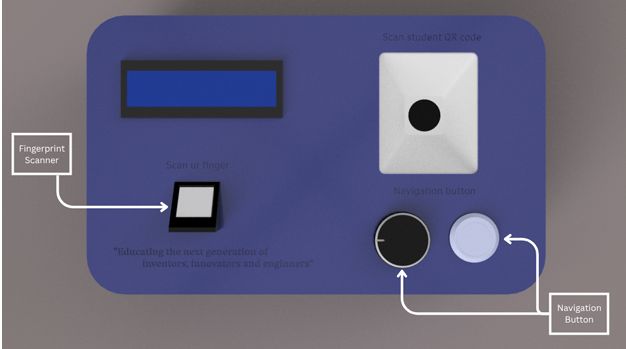
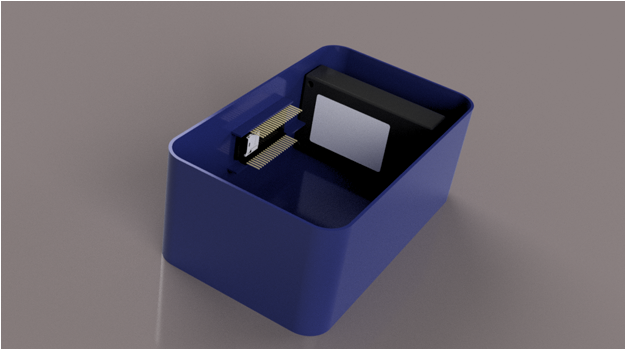
The Bio-Scan Attendance System will manifest as a compact, durable, and user-friendly standalone device, designed for placement at classroom entrances, lecture halls, or strategic campus locations. The design will draw inspiration from the provided image, ensuring a clean, modern aesthetic and intuitive interaction points. The main housing would be 3D printed with PLA. An LCD Display (as depicted in the top-left of the reference image) will provide real-time feedback to the student (e.g., "Scan QR Code," "Scan Finger," "Attendance Recorded," "Access Denied"). With an QR Code Scanner, (visible as the larger white square with a black center in the top-right of the image) user can rapidly scan student ID QR codes during the initial registration process. This ensures accurate student identification before fingerprint enrollment.
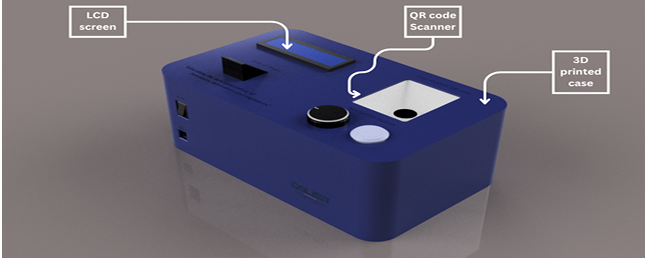
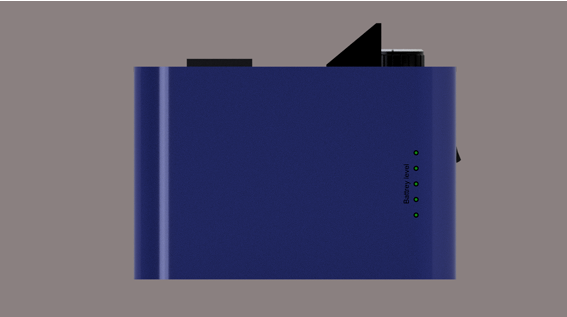
The Bio-Scanner is equipped also with a Fingerprint Sensor (the smaller white square with a black center in the middle-left of the image) for both student registration and daily attendance check-ins. This sensor will capture and verify unique biometric data. Navigation Buttons, rotary knob and a push-button (as shown in the bottom-right of the image) will serve as simple navigation and selection controls for system administrators or for specific student interactions . The ESP32's integrated Wi-Fi capabilities will enable seamless connectivity, managing data processing, sensor inputs, display outputs, and facilitating communication with the central database. The ESP32 is powered by an rechargeable battery.